
What Sells Best at Garage Sales
Yardmine
March 17, 2026
Not everything in your house is worth dragging to the driveway. Some stuff flies off the table before 9 AM. Other stuff sits there all day collecting sympathy glances. Here's what actually sells — and what you should skip.
The Big Winners: What People Come Looking For
Some categories consistently outperform everything else at garage sales. These are the items that serious shoppers are specifically hunting for when they map out their Saturday morning route.
Tools
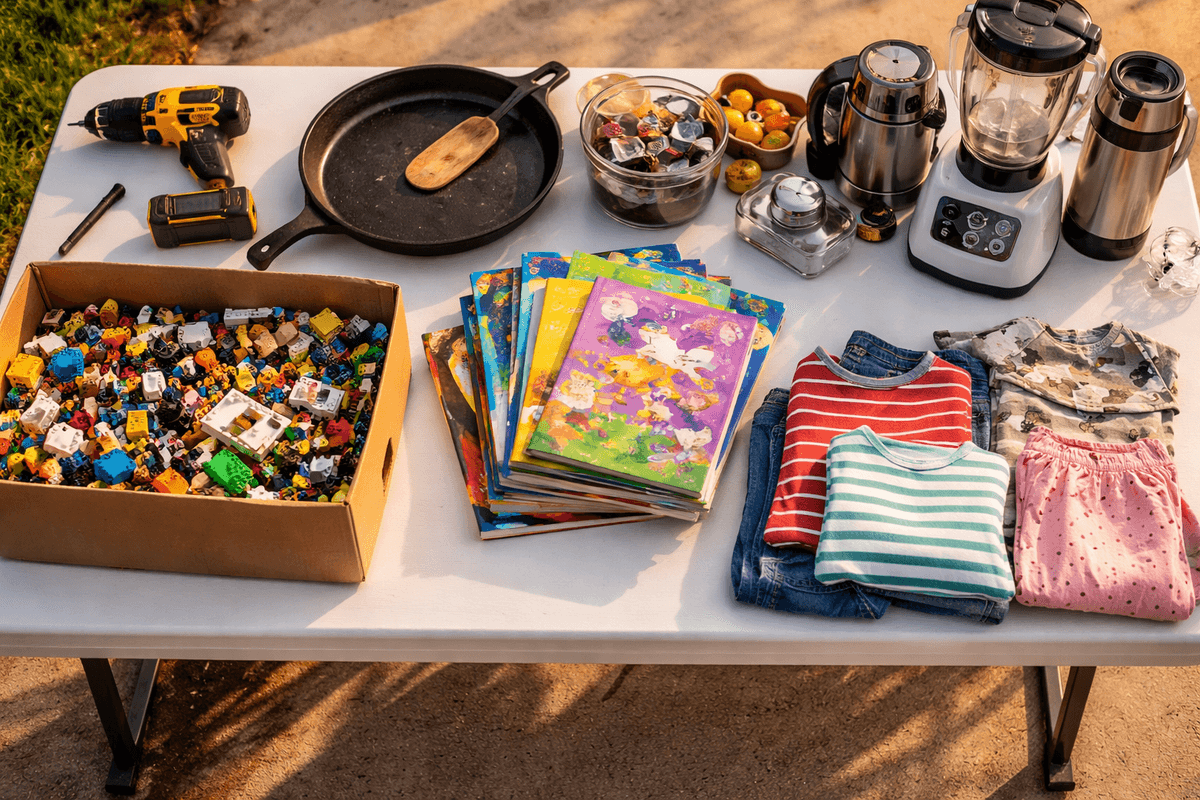
Hand tools and power tools are the single best-selling category at garage sales. Wrenches, screwdrivers, drills, saws — if it's functional, it sells. Buyers know that a $150 DeWalt drill for $25 is a steal, and they don't need to try it on for size. Name-brand power tools (DeWalt, Makita, Milwaukee) in working condition will often sell within the first hour. Even rusty hand tools move if they're priced at a dollar or two.
Kids' Stuff
Parents are the most motivated garage sale shoppers on the planet. Kids outgrow things fast, and nobody wants to pay full retail for clothes a toddler will wear for three months. Baby gear (strollers, high chairs, pack-and-plays), kids' clothing in good condition, and toys all sell well. LEGO is practically currency at garage sales — complete sets with instructions can fetch $10-20, and even a gallon bag of loose bricks will sell for $5.
Kitchen Appliances and Cookware
Small appliances — coffee makers, blenders, Instant Pots, toasters — move quickly as long as they work. Slap a "WORKS!" sticker on them and they'll walk off the table. Cast iron skillets are sleeper hits. A Lodge skillet you bought for $25 and barely used will sell for $10 without negotiation. Full cookware sets, especially stainless steel, are also strong sellers.
Furniture
This is your highest-dollar category. A decent dresser, bookshelf, or dining table can fetch $20-75 — more than anything else on your driveway. The catch: furniture takes up space and effort to display. Pull it out where people can see it from the street. Buyers who are looking for furniture often drive past first to see if it's worth stopping.
Books (in Bulk)
Individual paperbacks at $1 each? They'll sit there. A "fill a bag for $5" table? You'll move 50 books before lunch. The key is volume pricing. People love the feeling of getting a deal, and books are light enough that impulse buying kicks in when the price is right.
The Consistent Sellers
These won't generate the same excitement as tools or furniture, but they move steadily all day.
Sporting goods and outdoor gear. Bikes, golf clubs, camping equipment, dumbbells — anything fitness or outdoor related. These items are expensive new and people know it. A working treadmill priced at $40 will sell to someone who's been putting off that purchase for months.
Holiday and seasonal décor. Christmas decorations are the standout here, but Halloween and fall décor do well too. Timing matters — selling Christmas stuff in October is ideal. Selling it in April is a tough ask.
Vinyl records and vintage items. The resurgence of vinyl is real, and crate-diggers will come specifically for records. Vintage anything — old signs, retro kitchenware, mid-century furniture — attracts a dedicated crowd. If you're not sure about the value of something vintage, a "make an offer" tag is your friend.
Board games and puzzles. As long as all the pieces are there. This is critical. Write "COMPLETE" on the box in marker. A board game missing three pieces is worthless; a complete one is worth $3-5.
What Doesn't Sell (Save Yourself the Trouble)
Some things reliably don't move at garage sales, no matter how you price them.
Old textbooks. Even at $1, nobody wants your 2014 Organic Chemistry textbook. The information is outdated, and students buy current editions. Recycle or donate.
VHS tapes and DVDs. The market has moved on. A few Disney VHS tapes have collector value, but 99% of your collection won't sell. DVDs do slightly better at $1-2, but don't expect to clear the shelf.
Outdated electronics. That first-generation Kindle, the iPod Nano, the printer from 2015. If you wouldn't buy it at Goodwill, neither will anyone at your sale. Exception: retro gaming consoles (N64, GameCube, original PlayStation) — those have nostalgia value and sell well.
Encyclopedias. Just... no. Not even for free. This is the number one "please take it off my hands" item at garage sales and it never works.
Mattresses and pillows. Health concerns aside, many areas have regulations against selling used mattresses. Even where it's legal, buyers avoid them. Donate or dispose of these.
Generic home décor. The mass-produced wall art from HomeGoods, the dusty artificial flower arrangement, the inspirational "Live Laugh Love" sign. These items have almost no resale value because buyers can get them new for a few dollars.
How to Maximize What You Sell
Lead with your best stuff. Put tools, furniture, and electronics at the front of the driveway where they're visible from the street. If someone drives past and sees a good table and some power tools, they'll stop. If all they see is a pile of clothes, they might keep driving. (For a full strategy on layout and setup, see our complete guide to having a successful garage sale.)
Clean and test everything. A dusty blender with a stained carafe looks broken even if it works perfectly. Spend 10 minutes wiping things down. It's the difference between "$2?" and "$8 seems fair."
Group related items together. Create a "tools" section, a "kids' corner," a "kitchen" table. Shoppers scan for categories, not individual items. When someone interested in tools sees them all in one place, they'll browse the whole section instead of picking through mixed piles.
Price to sell, not to recoup. This is the hardest part. That stand mixer cost you $300 new. It's worth $40-50 at a garage sale. If you price it at $150, it'll sit there all day and you'll carry it back inside. The goal is to turn things into cash, not to get fair market value. (Need help figuring out prices? Our garage sale pricing guide has category-by-category suggestions.)
Post photos of your best items online. When you list your sale on Yardmine, include photos of the items that will draw people in — the furniture, tools, electronics, and anything unique. Shoppers browsing the map will click on your sale when they see something specific they want.
The Bottom Line
Focus your energy on the high-demand categories: tools, kids' stuff, kitchen items, furniture, and sporting goods. Clean them up, price them to sell, and put them front and center. For everything else, price low and let volume do the work. The stuff that doesn't sell? Box it up for donation at the end of the day and don't look back.
Ready to list your sale? Post it for free on Yardmine and let local buyers know what you've got.
Ready to host your own sale?
List for free and reach local shoppers.